Generate either document free: the Proforma Invoice Generator for quotations, or the GST Invoice Generator once the deal is closed.
What Is a Proforma Invoice?
A proforma invoice is a preliminary document sent by a seller to a prospective buyer before a sale is confirmed. It describes the goods or services, quantities, prices, and estimated taxes — but it is not a legal demand for payment and does not create a GST liability.
Think of it as a detailed quotation or pre-shipment estimate. Proforma invoices are widely used in:
- Export trade (for customs and import license purposes)
- Government tenders and procurement
- Project proposals and advance quotes
- Advance payment requests before service delivery
What Is a Tax Invoice?
A tax invoice is the official GST document issued by a registered supplier after making a taxable supply. It is a legal record that:
- Creates a GST liability for the supplier
- Allows the buyer to claim Input Tax Credit
- Must be reported in GSTR-1 returns
- Serves as proof of supply in legal disputes
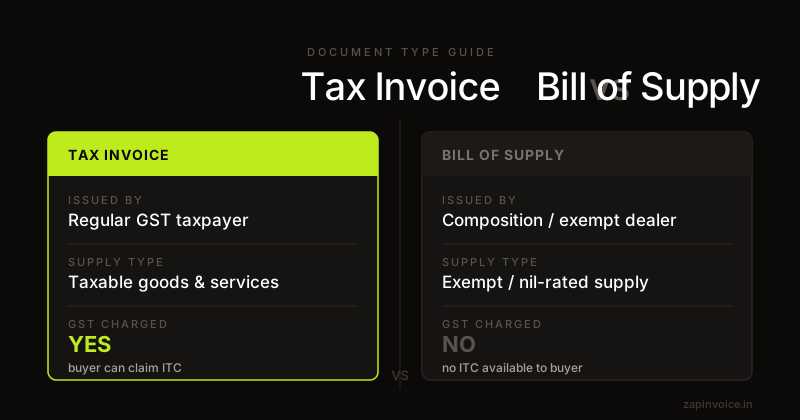
Key Differences Side by Side
- Purpose: Proforma = pre-sale estimate | Tax Invoice = post-supply legal document
- GST liability: Proforma = None | Tax Invoice = Yes, at the rate shown
- ITC eligibility for buyer: Proforma = No | Tax Invoice = Yes
- GSTR-1 reporting: Proforma = Not reported | Tax Invoice = Mandatory
- Sequential numbering: Proforma = Separate series | Tax Invoice = Mandatory consecutive series
- Time of issuance: Proforma = Before supply | Tax Invoice = At or after supply
- Legal enforceability: Proforma = Not binding | Tax Invoice = Legally binding
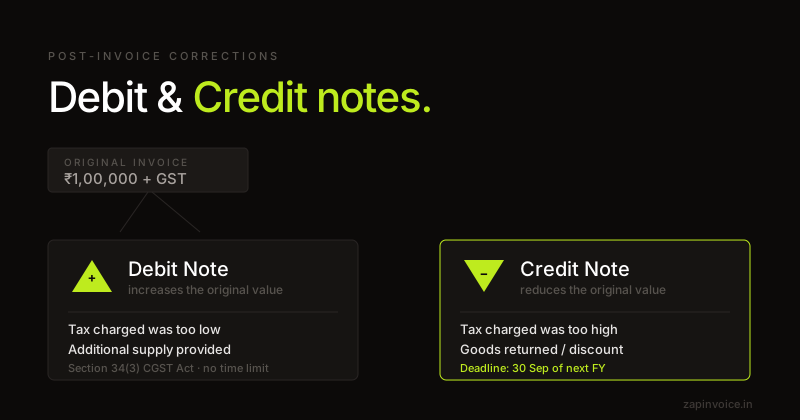
- Revisions: Proforma = Can be revised freely | Tax Invoice = Cannot be edited; use credit/debit note
When to Use a Proforma Invoice
- Export inquiries — Buyers in foreign countries need a proforma to open a Letter of Credit (LC) with their bank
- Advance payment requests — Ask for a deposit before starting work, without triggering a GST event
- Government quotations — Many government departments require a proforma before issuing a purchase order
- Import customs purposes — Customs authorities may accept a proforma for assessment if the final invoice isn't available
- Large project estimates — When the final scope isn't confirmed, a proforma lets both parties agree on approximate costs
When to Use a Tax Invoice
- When the supply has been delivered or the service has been rendered
- When you receive full or partial payment for a taxable supply
- For all B2B supplies where the buyer will claim ITC
- For export of goods or services (with or without IGST)
Proforma Invoice Format in India
While there is no legal format requirement, a proforma invoice should include:
- The words "PROFORMA INVOICE" prominently displayed
- Your business name, address, and GSTIN (for reference)
- Proforma number (separate series, e.g., PI-2026-001)
- Date of issue and validity period (e.g., "Valid for 30 days")
- Buyer name and address
- Description of goods/services, quantity, unit price
- Estimated GST (clearly marked as "Indicative / Estimated")
- Payment terms and bank details
- Delivery terms (especially for exports: FOB, CIF, etc.)
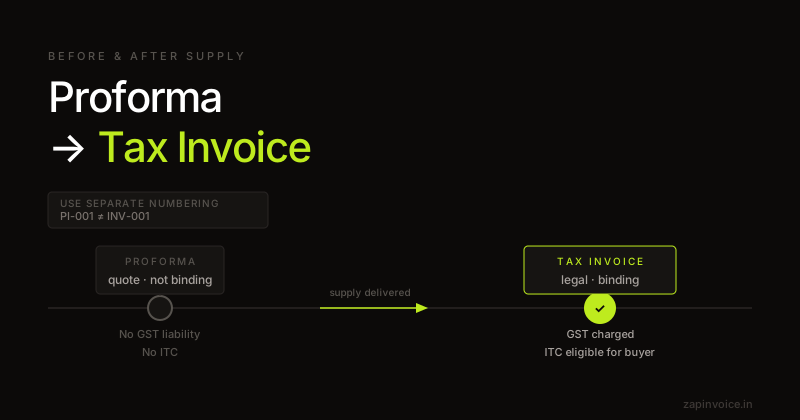
Proforma to Tax Invoice — The Workflow
- Send proforma invoice to buyer for approval
- Buyer reviews, negotiates, and confirms the order
- You deliver goods or render services
- Issue a tax invoice with its own sequential number
- The proforma is archived for reference — it is not reported to GSTN
Never treat a proforma as a tax invoice even if the buyer pays against it. Always follow up with a proper tax invoice after supply.
Common Mistakes
- Using proforma invoice numbers in the tax invoice sequence — These must be entirely separate numbering series
- Treating advance payments as requiring a tax invoice immediately — Under GST, advance received for services triggers a tax liability; you must issue a receipt voucher + tax invoice
- Not marking proforma as "Proforma" — An unlabelled invoice creates confusion with tax invoices during audits
- Reporting proforma invoices in GSTR-1 — Only actual tax invoices belong in GSTR-1