Short on time? Create a compliant invoice in under a minute with the free GST Invoice Generator — the CGST/SGST/IGST split is automatic.
Do Freelancers Need GST Registration?
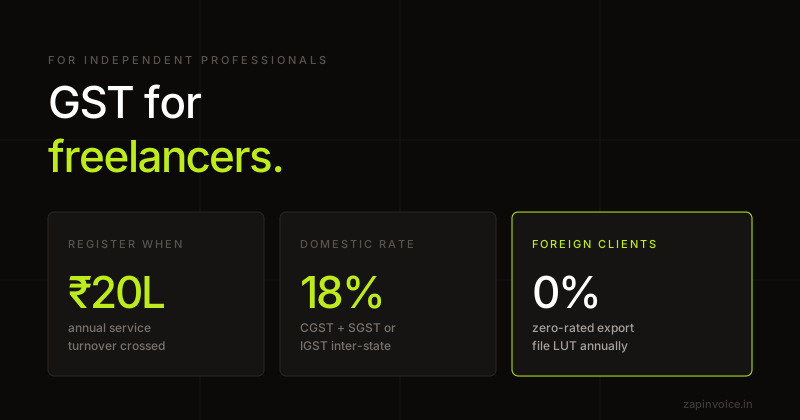
GST registration for freelancers depends on your annual turnover and the nature of your clients:
- Turnover above ₹20 lakh: Mandatory registration for services (₹10 lakh for special category states: J&K, Himachal, Uttarakhand, Manipur, Mizoram, Nagaland, Tripura, Meghalaya, Arunachal, Sikkim)
- Exporting services (foreign clients): Register regardless of turnover — exports are "inter-state" supply under GST
- Below threshold: Voluntary registration is allowed and often beneficial (ITC claims, professional credibility)
GST Rate for Freelancers
Most freelance professional services attract 18% GST. This includes:
- Software development and IT services
- Graphic design, UI/UX
- Content writing, copywriting
- Digital marketing, SEO
- Consulting, management, legal advisory
- Accounting and financial services
- Translation and language services
Some services are exempt or at 0% — e.g., healthcare services, educational services aligned with university curriculum, certain agricultural services. Always verify your specific service category.
SAC Codes for Common Freelance Services
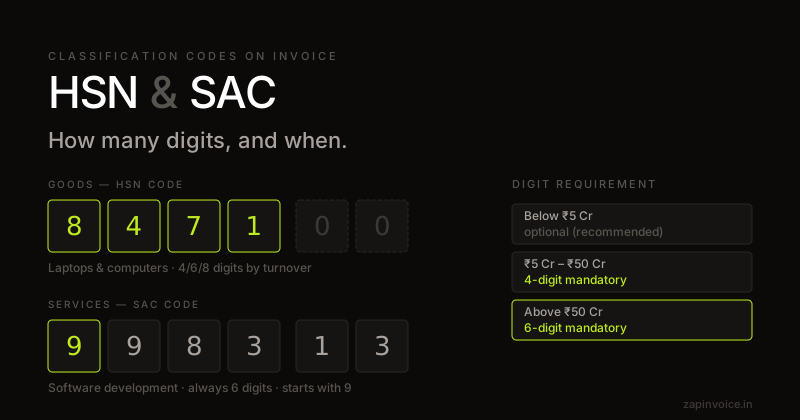
- SAC 998313 — Software development services
- SAC 998314 — IT consulting and design
- SAC 998311 — Data processing and management services
- SAC 998312 — Database and network administration
- SAC 999293 — Online content creation and subscription services
- SAC 998361 — Advertising and brand consulting
- SAC 998221 — Legal consultancy services
- SAC 998211 — Financial consulting and accounting services
- SAC 999799 — Other miscellaneous professional services
How to Create a GST Invoice as a Freelancer
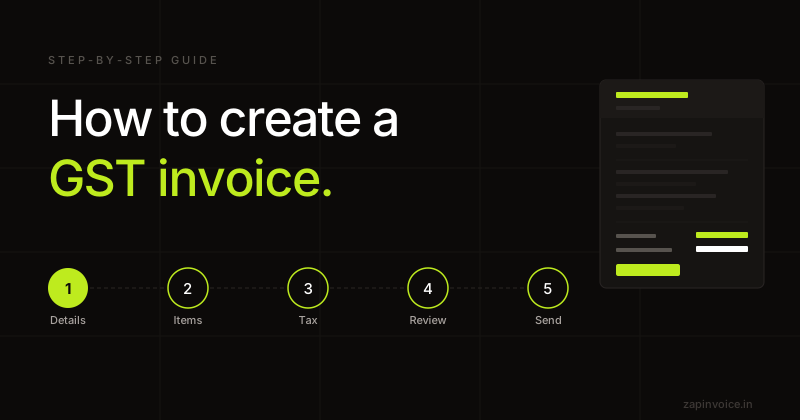
- Add your details — Full name/business name, address, and GSTIN (once registered)
- Add client details — Name, address, GSTIN (if the client is a company/registered entity)
- Use a sequential invoice number — e.g., RAVI/2026-27/001. Restart every April 1.
- Describe your service — Be specific: "Website development for e-commerce store, 120 hours" is better than "Website development"
- Add SAC code — Especially important once your turnover crosses ₹5 crore; recommended always
- Apply correct GST — 18% CGST+SGST for domestic clients in same state; 18% IGST for clients in other states or abroad (LUT route = 0%)
- Add payment terms and bank/UPI details — This speeds up payment significantly
Billing Domestic Clients (India)
For clients within India:
- Same state as you: Charge CGST + SGST (e.g., 9% + 9% for 18% GST)
- Different state: Charge IGST (e.g., 18% IGST)
- Always verify the client's GSTIN — they'll need it to claim ITC
- Issue the invoice within 30 days of service delivery
Billing Foreign Clients (Export of Services)
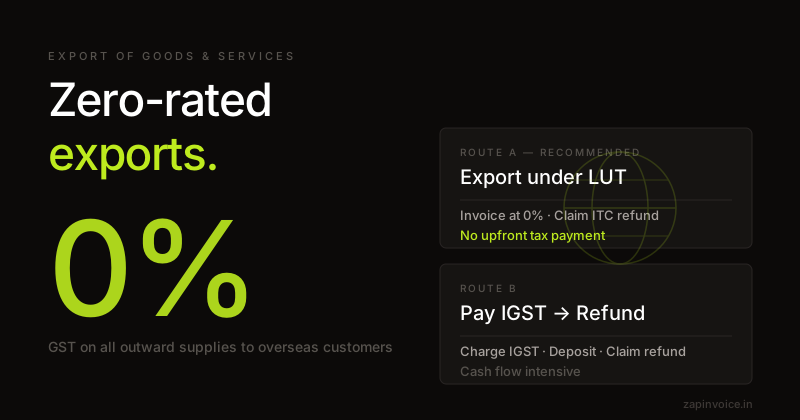
Services to foreign clients are "export of services" and qualify as zero-rated under GST — meaning you don't pay any GST, and there's nothing to collect from the client.
Conditions for Export of Services:
- Supplier is in India
- Recipient is outside India
- Place of supply is outside India
- Payment is received in foreign currency (or in INR where permitted by RBI)
- Supplier and recipient are not mere establishments of the same company
Two Routes for Zero-Rated Export:
- With LUT (Letter of Undertaking): File LUT on the GST portal (Form RFD-11) — then invoice foreign clients with 0% GST. No upfront tax payment. Most freelancers use this route.
- Without LUT (with IGST): Charge 18% IGST on the export invoice, collect it from the client, deposit it, and then claim a GST refund. More cash-flow intensive; avoid unless LUT is unavailable.
Claiming ITC as a Freelancer
Once GST-registered, you can claim Input Tax Credit on:
- Laptop, tablet, phone (if used for work — pro-rated if personal use involved)
- Internet and broadband bills
- Software subscriptions (Adobe, Figma, AWS, Notion, etc.)
- Co-working space rent
- Professional courses and certifications
- Stationery and office supplies
ITC cannot be claimed on personal expenses, employee-facing benefits (meals, club memberships), or motor vehicle expenses (except for specific business use). Keep all GST invoices from vendors to support your ITC claims during GSTR-2B reconciliation.
Filing Returns as a Freelancer
- GSTR-1 — Monthly (turnover above ₹5 crore) or quarterly (IFF/QRMP scheme for below ₹5 crore): Report all outward invoices
- GSTR-3B — Monthly/quarterly: Summary return, pay GST liability (output tax minus ITC)
- GSTR-9 — Annual return (mandatory above ₹2 crore; optional below)
Most freelancers with domestic + foreign clients opt for the QRMP scheme (Quarterly Return Monthly Payment) — file returns quarterly, pay tax monthly. This reduces compliance burden significantly.